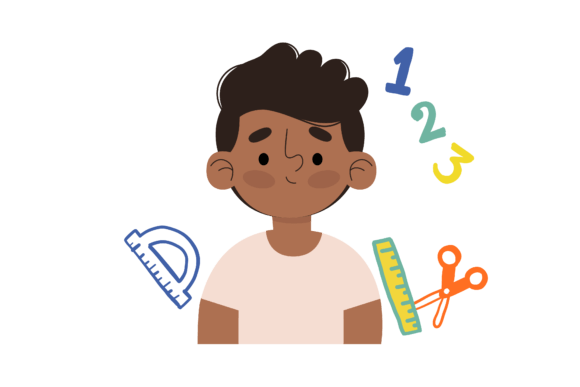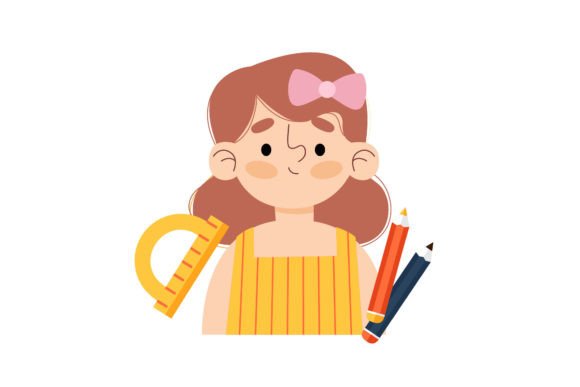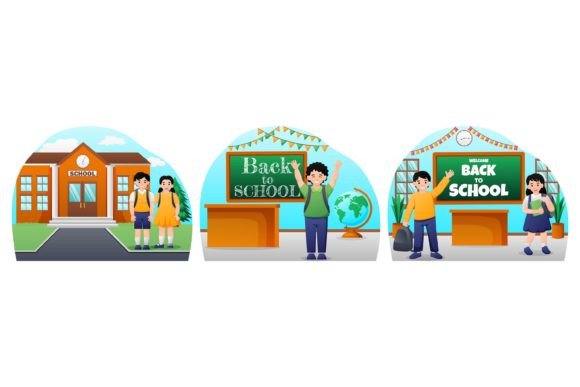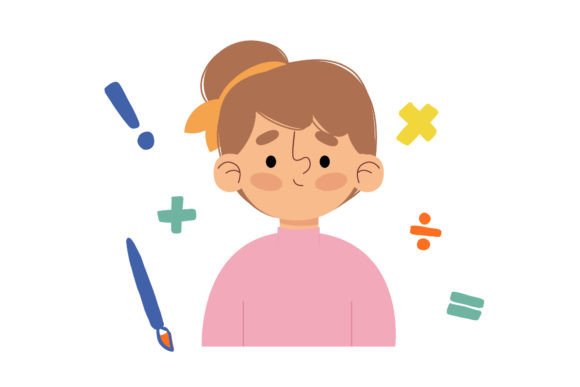
Flat People Stationary Back to School
Back-to-school season isn’t just for students anymore. It’s become a cultural reset moment—for educators designing classroom resources, small business owners launching fall marketing campaigns, freelance designers building editable asset libraries, and content creators refreshing social media templates. At the heart of this shift is a growing need for versatile, inclusive, and instantly adaptable visual assets. That’s where Flat People Stationary Back to School steps in—not as a decorative afterthought, but as a practical toolkit built for real-world workflows.
Why “Flat People” Design Resonates Now More Than Ever
Flat design—clean lines, minimal shading, intentional color palettes—has evolved beyond a trend into a functional standard. Its clarity supports accessibility, scales well across devices, and integrates smoothly into digital and print environments alike. When paired with diverse, gender-neutral, and activity-based flat people illustrations, it becomes especially valuable for educational materials, workplace training decks, or inclusive brand storytelling. Unlike photorealistic imagery, flat figures don’t carry unintended cultural or contextual baggage—they’re neutral canvases that users can reinterpret and repurpose without friction.
This matters because modern creators rarely work in isolation. A teacher might adapt a single illustration for a classroom poster, then reuse its vector components in a Google Slides lesson. A small-batch stationery brand could extract individual icons from the same file to stamp on notebooks or laser-cut greeting cards. A marketer may import the DXF version directly into a Cricut or Silhouette machine for custom back-to-school merch. The demand isn’t for static images—it’s for *editable starting points*.
What You Get: Format Flexibility That Matches Real Workflows
The Flat People Stationary Back to School collection delivers exactly that: six production-ready files on a consistent 1920px × 1280px canvas—large enough for high-resolution output, yet optimized for quick loading and editing.
- 1 AI File – Fully layered Adobe Illustrator source file. Edit colors, resize elements independently, adjust typography, or swap out accessories (e.g., change a backpack for a laptop or a notebook) without quality loss.
- 1 EPS File – Industry-standard vector format compatible with older design software and many print service providers. Ideal when sharing with vendors who require legacy compatibility.
- 1 DXF File – Ready for CNC routing, vinyl cutting, or craft machines. No tracing or conversion needed—just import and cut. Useful for educators making tactile learning tools or makers producing custom school-themed signage.
- 1 JPG File – High-quality raster preview. Perfect for quick mockups, email newsletters, or embedding in presentations where vector support isn’t available.
- 1 PNG File – Transparent background, crisp edges. Drop it straight into Canva, Notion, or Figma without white-box clipping or manual masking.
Notice there’s no PSD or SVG listed—and that’s intentional. While those formats have their place, this set prioritizes interoperability over novelty. AI and EPS cover professional vector editing; DXF bridges physical fabrication; JPG and PNG handle everyday digital use. It’s not about having every possible format—it’s about eliminating friction at each common touchpoint.
How This Fits Into Changing Creative Habits
Today’s professionals aren’t just designing *for* back-to-school—they’re designing *around* it. Think of a freelance graphic designer who spends Monday updating client social calendars, Tuesday prepping printable planners for an Etsy shop, and Wednesday collaborating on a district-wide teacher resource guide. Their toolset must pivot quickly. They don’t have time to redraw figures from scratch—or worse, license restrictive stock art that can’t be modified.
Similarly, educators are increasingly expected to produce polished, branded materials—but often without dedicated design support. A principal might need a welcome banner for Open House, a counselor may want handouts for student goal-setting workshops, and a PTA coordinator could be assembling a volunteer sign-up board. With editable flat people assets, they can maintain visual consistency across materials while tailoring tone and context themselves.
Even hobbyists benefit. Consider someone running a small Instagram account focused on mindful productivity. They might use the PNG version to layer over a photo of their desk setup, add a short caption about setting intentions for the new semester, and post—no design degree required. The barrier isn’t creativity; it’s access to flexible, respectful, and technically sound assets.
Practical Implications: Beyond the Download
Having multiple formats doesn’t just save time—it changes how you approach projects. For example:
- A curriculum developer uses the AI file to isolate individual characters, recolor them to match district branding, and build an interactive drag-and-drop activity in PowerPoint.
- A boutique stationery seller imports the DXF into their Glowforge interface, cuts matching flat people silhouettes from birch plywood, and packages them as “Back-to-School Build-Your-Own-Scene” kits.
- A nonprofit supporting first-generation college students adapts the PNGs into bilingual orientation slides—replacing English text bubbles with Spanish translations while keeping the expressive, welcoming visuals intact.
Each use case relies on the same foundational truth: the value isn’t in the illustration alone, but in how easily it integrates into your existing tools, timelines, and goals. There’s no “one-size-fits-all” design solution—but there *is* a size that fits *your* workflow, once you know which file to reach for.
Evolving Expectations—and What Comes Next
Five years ago, “back-to-school graphics” meant clipart-style apples and chalkboards. Today, users expect representation—not just diversity in skin tone, but in ability, learning style, family structure, and daily routines. Flat people illustrations respond to that by offering modularity: a figure holding a tablet instead of a textbook, another using a braille notetaker, or a group collaborating around a shared whiteboard. These aren’t gimmicks—they reflect how learning and working actually happen now.
That evolution also shows up in technical expectations. Buyers no longer assume they’ll get one JPEG and hope for the best. They check file lists before purchasing. They search for terms like “editable back-to-school vectors,” “DXF for Cricut school,” or “flat people PNG transparent.” They read comments asking, “Can I change the colors in Illustrator?” or “Will this scale for a 4’×8’ banner?” Meeting those expectations isn’t about adding more features—it’s about delivering what was promised, clearly and reliably.
Looking ahead, the most useful assets won’t be the flashiest—but the most interoperable, ethically sourced, and thoughtfully structured. That means consistent naming conventions across layers, logical grouping in vector files, and documentation that respects users’ time (like this description does—no fluff, no assumptions, no hidden limitations).
A Resource Designed for Doing, Not Just Displaying
Flat People Stationary Back to School isn’t meant to sit in a folder. It’s meant to be opened, adjusted, combined, printed, cut, shared, and remixed. Whether you’re drafting a welcome email to new hires, prototyping a classroom management app, or designing reusable lesson plan templates, these files reduce repetition without sacrificing intentionality.
And because they arrive ready-to-use—not locked behind watermarks, usage restrictions, or complex licensing tiers—you retain full creative control. No attribution required. No pixelated previews hiding low-res originals. Just clean, scalable, human-centered visuals that support your goals—not distract from them.
In a landscape where attention is scarce and deadlines are constant, practicality is the quiet superpower. This collection doesn’t promise transformation. It offers something more reliable: clarity, consistency, and the confidence that comes from knowing your next design step is already within reach.