Back to School Flat People Stationary: A Practical Asset for Educators and Design Professionals
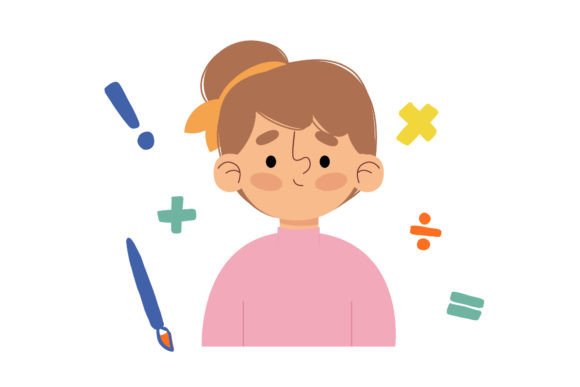
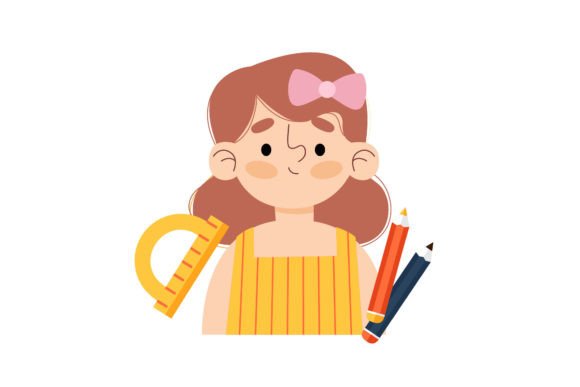
Back to School Flat People Stationary is a curated digital design resource built specifically for visual communication around academic transitions — from classroom welcome banners to digital newsletters, social media announcements, and printed handouts. Unlike generic clipart or overused stock illustrations, this set features intentionally simplified, scalable vector figures in consistent style: clean linework, balanced proportions, and neutral yet expressive poses. The “flat people” aesthetic avoids photorealism while retaining clarity and approachability — making it especially effective for audiences ranging from elementary students to adult learners and faculty.
What You Receive — Format Flexibility Meets Real-World Workflow Needs
The package delivers six distinct file formats on a standardized 1920px × 1280px canvas — a dimension that accommodates common presentation slides, website hero sections, and printable letter-size layouts without distortion or excessive scaling. This consistency reduces guesswork during integration.
- AI (Adobe Illustrator): Full layer organization with editable paths, colors, and typography — ideal for designers who need to adjust stroke weights, recolor elements, or isolate individual figures for custom compositions.
- EPS: Widely compatible with older design software and print workflows; retains vector fidelity for high-resolution output, including large-format signage or school posters.
- DXF: Enables direct import into CAD, laser cutting, and CNC applications — useful for educators integrating hands-on STEM projects or makerspace coordinators building physical classroom displays.
- JPG: Optimized for quick insertion into email templates, LMS dashboards (like Canvas or Google Classroom), or internal staff communications where transparency isn’t required.
- PNG: Includes alpha transparency, supporting seamless overlays on photos, gradients, or branded backgrounds — valuable for social media graphics or digital welcome kits.
This multi-format structure reflects thoughtful consideration of varied professional environments. A freelance graphic designer preparing back-to-school branding for a tutoring center can use the AI file to align with client brand guidelines. A school communications officer updating a district newsletter may opt for the PNG to drop into Canva or Microsoft Word without compatibility hiccups. Even non-designers — such as department heads or PTA coordinators — find the JPG and PNG files immediately usable in time-sensitive scenarios.
Design Integrity and Consistency Across Use Cases
One of the most practical strengths of Back to School Flat People Stationary lies in its stylistic cohesion. All figures share uniform line thickness, proportional scaling, and posture language — whether holding notebooks, standing beside chalkboards, or interacting with laptops. That consistency matters when assembling multi-element visuals: mismatched illustration styles quickly undermine credibility, particularly in institutional contexts where tone and professionalism are expected.
Color treatment is intentionally restrained — outlines remain black or dark gray, with optional flat fills in muted, accessible palettes. This supports WCAG-compliant contrast ratios when overlaid on light or dark backgrounds and allows easy recoloring to match existing brand systems (e.g., school colors or district identity standards). No gradients, textures, or complex shadows clutter the assets — reducing rendering issues across platforms and keeping editing time low.
Who Benefits Most — And Where It Fits Naturally
Educators preparing orientation materials, curriculum developers designing learner-facing resources, and instructional designers building online course shells will find immediate utility. For example, embedding these figures into a syllabus PDF helps break up text-heavy pages and signals inclusivity through diverse, gender-neutral representations. Similarly, a university admissions office might use them in animated “Meet Your Advisor” web banners — pairing the EPS version with After Effects for smooth vector-based motion.
Small business owners offering academic services — test prep companies, educational app developers, or after-school enrichment programs — gain efficiency by avoiding custom illustration commissions. Instead of budgeting $300–$600 for bespoke character art, they can license this set once and deploy variations across landing pages, email headers, and printed brochures. Freelance marketers managing multiple education-sector clients appreciate having a reusable, on-brand visual library that doesn’t require constant re-approval from stakeholders.
Bloggers and content creators covering edtech, learning science, or teacher wellness also benefit. Using consistent figures across a series of posts — say, illustrating stages of lesson planning or student engagement models — builds visual recognition and reinforces thematic continuity without relying on photography or video.
Practical Considerations and Limitations
While versatile, Back to School Flat People Stationary is not a substitute for context-specific illustration. It does not include scene-based compositions (e.g., full classrooms or outdoor playgrounds), nor does it offer animated variants or interactive SVG exports. Users requiring motion, depth cues, or culturally specific attire beyond basic neutrality will need supplemental assets.
Also worth noting: the set focuses on static poses rather than action sequences. There’s no running, writing on whiteboards, or group collaboration scenes — limiting its usefulness for highly narrative or process-oriented visuals. However, this restraint contributes to its adaptability: minimalism invites customization, not constraint.
File size remains lightweight across formats — none exceed 5 MB — ensuring fast loading in web editors and compatibility with cloud-based tools like Figma or Adobe Express. The DXF file, while functional, assumes basic familiarity with vector-to-CAD conversion; users new to fabrication workflows may need brief orientation before successful implementation.
Long-Term Value and Integration Potential
Because the assets are resolution-independent vectors, they retain quality across evolving platforms — from current HD displays to emerging AR interfaces used in campus wayfinding or virtual orientations. Their simplicity ensures longevity: unlike trend-driven illustrations that age quickly, flat design principles remain broadly legible and adaptable across design eras.
For teams maintaining recurring annual campaigns — think district-wide “First Day Countdown” initiatives or university welcome week toolkits — owning this set eliminates repeated licensing costs and streamlines version control. Updates to color schemes or figure arrangements can be made centrally and distributed internally without renegotiating usage rights.
In practice, the strongest ROI emerges not from one-off use, but from systematic integration: tagging assets in digital asset management systems, building Figma component libraries with auto-layout variants, or scripting batch exports for multilingual versions of orientation guides. Those workflows reward precision, consistency, and format readiness — all core attributes of this collection.
Ultimately, Back to School Flat People Stationary serves a clear niche: professionals who need dependable, editable, and ethically neutral human figures to support academic messaging — without sacrificing speed, accessibility, or visual coherence. Its value isn’t in novelty, but in reliability — the kind that makes routine design tasks feel lighter, more consistent, and better aligned with real classroom and institutional needs.