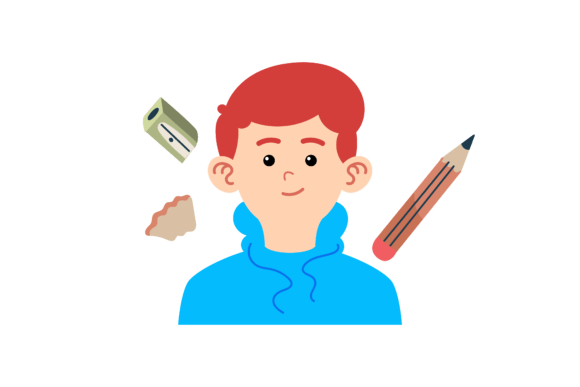
Back to School Illustration Person: A Practical Asset for Real-World Creative Workflows
When you're building educational materials, launching a seasonal marketing campaign, or designing classroom resources, visual consistency matters—not just aesthetically, but functionally. The Back to School Illustration Person is more than a decorative element. It’s a production-ready, multi-format asset designed to integrate smoothly into professional workflows where timing, compatibility, and flexibility are non-negotiable.
What This Asset Is—and What It’s Not
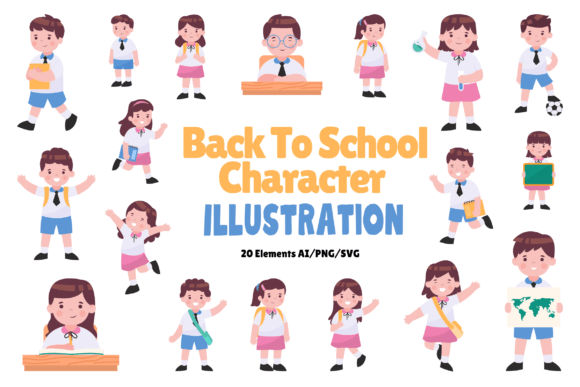
The Back to School Illustration Person is a vector-based, scalable illustration of a person in a back-to-school context—think a confident student with a notebook, backpack, or laptop—rendered at 1920px × 1280px. It arrives as six distinct file types: AI, EPS, SVG, DXF, JPG, and PNG. That combination isn’t arbitrary. Each format serves a specific role in different stages of creation, output, or collaboration.
It is not a stock photo or a generic clipart download. It’s built for precision: clean paths, layered vectors (in AI/EPS), transparency support (PNG/SVG), and engineering-grade scalability (DXF for laser cutting or CNC use). And because it’s delivered at a standardized high-resolution canvas size, it fits seamlessly into common presentation templates, social media banners, print layouts, and digital learning platforms without cropping or pixelation.
How It Fits Into Your Workflow—Before, During, and After
Most creative assets get used once and forgotten. This one supports multiple phases of a project lifecycle:
- Before execution: Use the SVG or AI file to test layout proportions in Figma or Adobe XD. Drop it into a mood board to align team expectations on tone—friendly but focused, modern but approachable.
- During production: Swap layers in the AI file to adjust clothing color, add accessories (like glasses or headphones), or isolate elements for animation. Export individual components as PNGs for web use or SVGs for responsive UIs.
- After launch: Repurpose the DXF version for physical signage in school lobbies or event booths. Reuse the JPG in email headers or printed handouts—no need to re-license or reformat.
This kind of continuity reduces redundant work. You’re not sourcing new images for each channel. You’re adapting one trusted source across contexts—saving time, maintaining brand cohesion, and avoiding licensing surprises.
Compatibility That Works With Your Tools—Not Against Them
Compatibility isn’t about checking boxes—it’s about reducing friction. Here’s how each format connects to real tools and teams:
- AI and EPS: Open directly in Adobe Illustrator or Affinity Designer. Ideal for designers who need editable paths, global color swatches, or precise typography alignment.
- SVG: Embed natively in HTML, React components, or WordPress blocks. Scales infinitely on any screen and supports CSS styling—perfect for interactive learning modules or accessible educational websites.
- DXF: Import into CorelDRAW, AutoCAD, LightBurn, or Fusion 360. Used by makers, educators running STEM labs, or small businesses producing custom merchandise like engraved notebooks or acrylic desk signs.
- JPG and PNG: Plug-and-play for Canva, Google Slides, Mailchimp, or LMS platforms like Canvas or Moodle. No software required—just drag, resize, and go.
If your team includes freelancers using different software, or if you outsource print production, having all six formats means no last-minute file conversions—or delays waiting for someone to “send the right version.”
Practical Implementation Tips for Consistent Results
Getting value from this asset starts before you open the first file. Consider these practical steps:
- Organize by use case, not format. Create folders named “Web,” “Print,” “Physical Production,” and “Presentations”—then drop the appropriate version into each. That way, when you’re building a workshop slide deck at 10 p.m., you grab the PNG instantly instead of hunting through six files.
- Test transparency early. If you plan to layer the illustration over photos or gradients, verify the PNG has a clean alpha channel and the SVG renders correctly in your target browser or CMS. A quick export-and-preview loop saves revision rounds later.
- Standardize color usage. Open the AI file and replace default colors with your brand palette using Global Swatches. Save that as a new “Brand-Ready” version—so every future edit respects your identity system.
- Document edits. Keep a simple text file noting which layers were renamed, what fonts were substituted, or where shadows were added. Future-you (or your colleague) will appreciate knowing why the backpack icon appears twice in the Layers panel.
Long-Term Use: Why Format Variety Supports Sustainability
Design assets age—not because they become outdated, but because tools and platforms evolve. A PNG may work today, but tomorrow’s LMS update might require SVG for accessibility compliance. A DXF file may seem irrelevant until you decide to offer laser-cut classroom name tags as a teacher appreciation gift.
Having all six formats means you’re prepared for shifts in platform requirements, team composition, or output needs—without repurchasing, re-licensing, or recreating. It also supports quality control: compare the SVG and EPS renderings side-by-side to catch subtle path errors before sending to print. Or use the AI file to generate consistent variations (e.g., versions with different skin tones or mobility aids) while preserving proportions and style integrity.
Real Integration Examples Across Roles
Here’s how professionals actually use this asset—not as a standalone image, but as part of a larger process:
- Educators: Insert the PNG into Google Slides lesson decks, then export slides as PDFs for student handouts. Later, use the SVG to animate transitions in an interactive EdTech prototype.
- Small business owners: Import the DXF into LightBurn to cut vinyl decals for “First Day of School” tote bags sold at local fairs—same illustration, same proportions, no redraw needed.
- Bloggers and content creators: Embed the SVG inline in blog posts about study tips or remote learning tools. It loads faster than JPG, scales on mobile, and remains sharp on retina displays.
- Freelance designers: Place the AI file into a master InDesign template for client-branded back-to-school newsletters. Swap colors per client, export to PDF/X-4, and deliver print-ready files in under 15 minutes.
In each case, the Back to School Illustration Person doesn’t replace strategy or skill—it removes repetitive technical hurdles so you can focus on outcomes: clearer communication, stronger engagement, faster turnaround, and more thoughtful design decisions.
Final Thought: Efficiency Starts With Intentional Preparation
Buying a single, well-structured illustration may seem minor next to curriculum development or campaign planning. But in practice, it’s often the small, pre-vetted assets—the ones with predictable dimensions, broad compatibility, and clean structure—that keep momentum going. When your deadline is tight and your tools are diverse, knowing exactly which file to reach for—and why it’ll work—makes the difference between shipping on time and scrambling at the last minute. The Back to School Illustration Person is built for that reality.