White Kids Back to School Sublimation: A Practical Asset for Educators and Creative Professionals
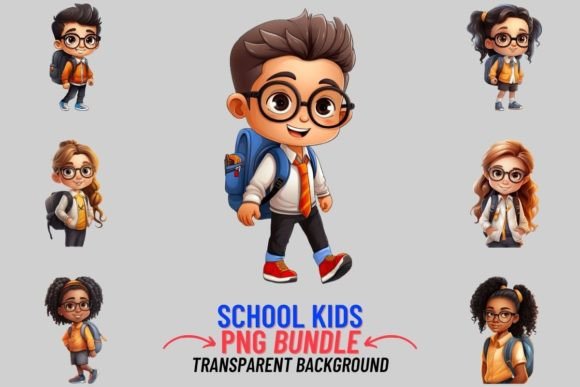
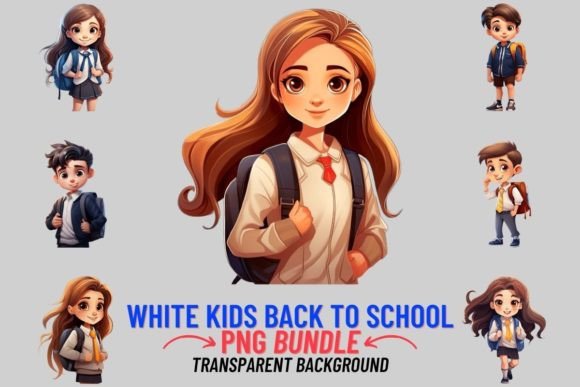
White Kids Back to School Sublimation refers to a curated set of high-resolution, transparent-background PNG illustrations designed specifically for both digital and physical applications tied to the back-to-school season. Unlike generic clipart or stock photos, this collection centers on culturally specific, age-appropriate depictions of white children—rendered in a soft watercolor style—with backpacks, notebooks, and expressive enthusiasm for learning. Its primary utility lies not in novelty alone, but in its consistent execution, technical readiness, and thoughtful alignment with real-world production needs.
What Makes This Collection Stand Out in Practice?
The 16-file White Kids Back to School 16 PNG Sublimation set delivers more than visual appeal—it meets foundational requirements for professional reuse. Each image is provided at 300 DPI, scalable up to 13×13 inches, and sized at 4096×4096 pixels. That resolution ensures crisp output whether printed on vinyl banners for school hallways or embedded into interactive e-learning modules. The transparent background eliminates time-consuming masking or layer cleanup—a tangible efficiency gain for designers managing tight deadlines.
Unlike many sublimation-ready assets that prioritize quantity over cohesion, this collection maintains stylistic continuity: gentle watercolor textures, balanced color saturation, and naturalistic proportions across all figures. Children are depicted in varied poses—adjusting straps, holding pencils, smiling mid-stride—without repetitive framing or awkward scaling. That consistency supports branding integrity, especially when assembling multi-element resources like classroom posters or curriculum-aligned workbooks.
Real-World Usability Across Common Workflows
For educators developing printable lesson plans or classroom décor, these PNGs integrate cleanly into Canva, Google Slides, or Adobe InDesign without rasterization artifacts or edge halos. One teacher reported using three images from the set to design a “First Week Goals” bulletin board—resizing two figures to 8 inches tall while keeping the third at full scale as a focal point. All retained clarity, even when printed on matte cardstock via a standard office laser printer.
Freelance designers working with small school districts or tutoring startups have found the collection particularly useful for client-facing deliverables. Because the illustrations avoid exaggerated cartoonism or dated tropes, they support inclusive yet realistic portrayals of early learners—ideal for materials intended for parent handouts, orientation guides, or district websites where tone and authenticity matter.
Sublimation printers also benefit: the clean edges and absence of anti-aliasing bleed mean smoother transfers onto mugs, tote bags, or polyester apparel. Users report minimal test runs needed before achieving sharp, color-accurate results—especially important when fulfilling custom orders for PTA events or school fundraisers.
Strengths Beyond Aesthetics
- Technical reliability: No hidden layers, embedded fonts, or linked assets—just self-contained PNGs ready for immediate import.
- Workflow flexibility: Works equally well in vector-based environments (via embedding) and raster workflows (for compositing or texture overlays).
- Contextual appropriateness: Figures wear modern, modest clothing—no uniforms or stereotyped accessories—making them adaptable across grade levels and regional expectations.
- Long-term scalability: At 4096×4096px, files support future use cases like large-format signage or high-res digital displays without re-sourcing.
Who Benefits Most—and Where It Fits Best
This collection serves professionals who need dependable, ethically sourced visual assets without licensing ambiguity. Educators building original curricular materials—from kindergarten welcome packets to middle school STEM activity kits—gain reusable components that reinforce thematic continuity. Small business owners running educational supply shops, after-school programs, or tutoring services can apply the illustrations across social media graphics, email headers, and product packaging without violating usage terms common with free stock sites.
Bloggers and content creators focused on parenting, homeschooling, or early childhood development find value in having on-brand visuals that reflect their audience’s lived experience—without resorting to overused stock photography. Similarly, freelance graphic designers serving school-related clients appreciate the time saved in asset sourcing and the reduced need for post-processing adjustments.
That said, it’s worth noting limitations. The collection features only white children—intentionally so, given its naming and scope. It does not include racial, ethnic, or ability diversity beyond that parameter. Users seeking broader representation will need complementary resources. Also, while the watercolor aesthetic suits warm, approachable projects, it may feel incongruent in highly technical or corporate-edtech contexts where minimalist line art or photorealism dominates.
Integration Tips for Better Results
To maximize effectiveness, consider pairing these illustrations with complementary typefaces—such as Quicksand or Nunito—that echo the friendly, accessible tone. When designing print layouts, maintain at least 0.25 inches of margin around each figure to prevent accidental cropping. For sublimation, convert RGB files to CMYK only if your printer requires it; otherwise, preserve the original color profile to retain vibrancy.
One practical recommendation: organize the files by pose rather than number. Renaming “file_07.png” to “girl-backpack-shoulder-adjust.png” improves searchability in large project folders—especially helpful when collaborating or revisiting assets months later.
Final Assessment: Purpose-Built, Not Just Pretty
White Kids Back to School Sublimation isn’t positioned as a universal solution—but as a purpose-built tool for specific, recurring needs. Its value emerges most clearly when evaluated against actual production constraints: time, fidelity, compatibility, and contextual fit. It performs reliably where many similar assets falter—maintaining clarity across sizes, simplifying prep work, and supporting cohesive storytelling around learning transitions. For professionals routinely creating school-year materials, it reduces friction without sacrificing quality or intentionality. That balance—between creative expression and functional precision—is what makes White Kids Back to School Sublimation a quietly effective addition to a working toolkit.