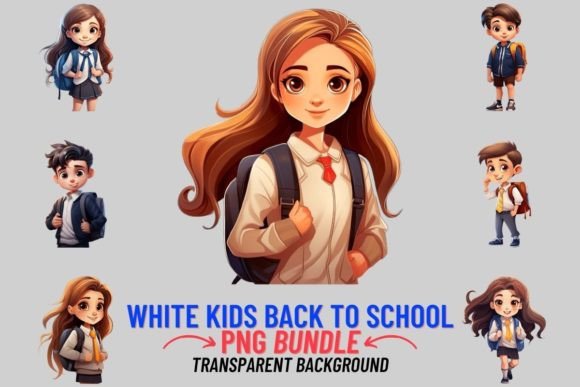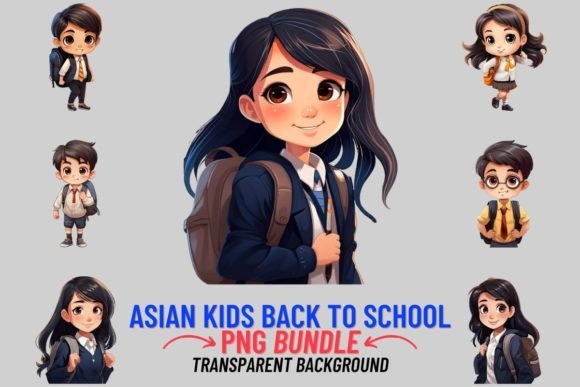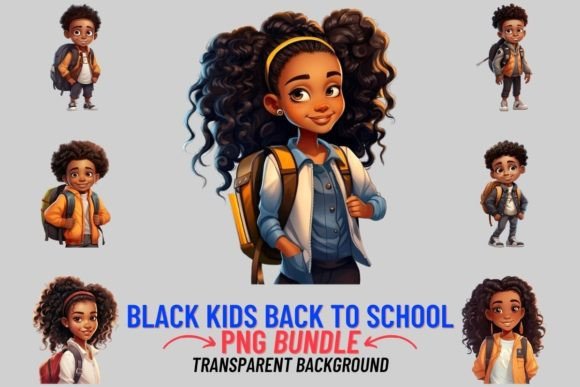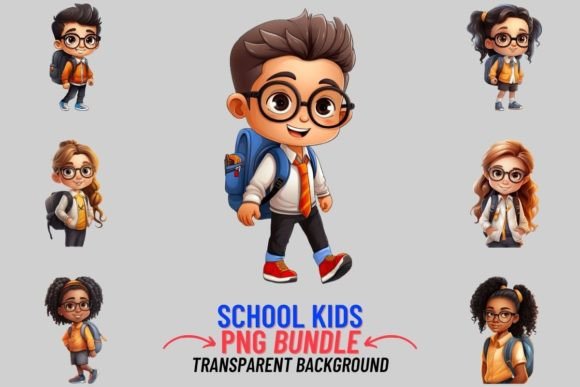
Kids Back to School 12 PNG Sublimation: Thoughtful Visuals for Modern Learning & Creative Work
Back-to-school season isn’t just about new notebooks and lunchboxes anymore—it’s a creative inflection point. Educators design welcoming classroom environments, small business owners launch seasonal merch lines, bloggers craft relatable parenting content, and indie designers develop digital planners or printable kits—all while balancing authenticity, inclusivity, and visual polish. That’s where Kids Back to School 12 PNG Sublimation steps in: not as generic clipart, but as a cohesive, high-fidelity watercolor collection built for real-world use.
What Makes This Collection Different From Standard School Graphics?
This isn’t a grab-bag of cartoonish icons or overused stock vectors. The Kids Back to School 12 PNG Sublimation set features twelve hand-crafted illustrations—each rendered in soft, expressive watercolor textures—with intentional details: children wearing glasses, adjusting backpack straps, holding pencils or open books, and engaging with learning tools in quiet, confident ways. Every image arrives as a transparent-background PNG at 4096×4096 pixels (300 DPI, scalable up to 13×13 inches), making them suitable for both digital interfaces and print-ready applications like sublimation mugs, tote bags, or classroom posters.
The transparency and resolution mean no awkward white boxes or pixelation when layered over gradients, textured backgrounds, or educational templates. And because the watercolor aesthetic avoids hyper-realism or dated cartoon tropes, these images age well—unlike trend-dependent designs that feel outdated by next August.
Why Watercolor Kids Imagery Fits Today’s Creative & Educational Needs
Visual language in education and family-facing content has shifted meaningfully in recent years. Parents and teachers increasingly seek materials that reflect emotional nuance—not just “happy kids smiling at chalkboards.” There’s growing appreciation for gentle, unhurried aesthetics that signal safety, curiosity, and individuality. Watercolor fits this quietly: its subtle imperfections and organic flow suggest humanity, not perfection. It aligns with broader design trends favoring warmth over slickness—think of the rise of tactile UI elements, analog-inspired fonts, and mindful branding in edtech startups and homeschool communities.
At the same time, educators are under increasing pressure to personalize learning experiences without adding administrative overhead. A single high-quality illustration can replace hours of searching, editing, or commissioning custom art. With Kids Back to School 12 PNG Sublimation, a teacher building a Google Slides welcome unit can drop in a child holding a notebook mid-thought—no cropping, no background removal, no licensing ambiguity. A freelance designer crafting a back-to-school planner for Etsy doesn’t need to source separate assets for cover, divider pages, and reward stickers; the consistent style ties everything together visually and emotionally.
Real-World Applications Across Roles
Here’s how professionals across sectors are putting these files to practical use—without overcomplicating workflow:
- Educators & Curriculum Designers: Embedding into editable PDF worksheets, interactive Seesaw activities, or printed behavior charts—where clarity and calm tone matter more than flash.
- Small Business Owners: Using individual PNGs for sublimation on reusable lunch bags, pencil cases, or classroom supply bundles sold via Shopify or local craft fairs.
- Bloggers & Social Media Managers: Creating Instagram carousels about “first-day-of-school mindset shifts” or Pinterest pins for “inclusive classroom setup ideas”—with visuals that stand out in crowded feeds.
- eBook & Digital Product Creators: Illustrating chapters in early literacy guides, SEL (social-emotional learning) workbooks, or bilingual vocabulary builders—where cultural neutrality and age-appropriate expression are essential.
- Hobbyists & Scrapbookers: Printing onto cardstock or watercolor paper for handmade greeting cards, memory journals, or bulletin board displays—leveraging the 300 DPI resolution for crisp detail even at physical scale.
Sublimation-Ready Doesn’t Mean Limited to Apparel
While the name includes “sublimation,” the utility extends far beyond heat-transfer mugs and t-shirts. The term reflects technical readiness—not narrow application. Because each file is high-res, RGB-optimized, and transparent, it integrates seamlessly into modern creative stacks: Canva templates, Adobe Express projects, Figma-based classroom dashboards, or Notion student planners. Even users unfamiliar with sublimation printing benefit from the clean edges and color fidelity—no jagged halos, no color-shift surprises on screen or paper.
That versatility matters now more than ever. Many creators juggle multiple output formats—digital first, then print-on-demand, then social snippets—and need assets that transition cleanly between them. Relying on one adaptable set reduces version control headaches and ensures brand or project cohesion across touchpoints.
Thoughtful Design Choices Reflect Changing Expectations
Notice what’s present—and what’s intentionally absent. These illustrations include children wearing glasses, suggesting attention to neurodiversity and accessibility without labeling or stereotyping. Backpacks appear worn-in, not oversized or branded—keeping focus on the child, not consumerism. Poses are relaxed, not performative: a kid glancing sideways while sketching, another adjusting glasses mid-reading. That subtlety responds to audience fatigue with overly polished, algorithm-optimized imagery. People respond more deeply to visuals that leave room for interpretation—and invite empathy, not just recognition.
This attention to quiet realism also supports inclusive implementation. A homeschool parent selecting images for a child with sensory sensitivities might choose the illustration of a child sitting quietly with a journal over one depicting loud group activity—without needing to edit or search elsewhere. That level of intentionality saves time and honors diverse learning rhythms.
Getting Started Is Simpler Than You Think
You don’t need advanced design skills to use Kids Back to School 12 PNG Sublimation effectively. Start small: pick one image that matches your current project’s mood—a child holding a magnifying glass for a science-themed worksheet, or one adjusting a backpack strap for a “getting organized” checklist. Drop it into your tool of choice, resize as needed (the 4096px width allows generous scaling), and adjust opacity or blend mode if layering over textured backgrounds. Most platforms preserve transparency automatically.
For deeper integration, consider using two or three complementary illustrations to establish visual rhythm—e.g., alternating poses across slide decks or printable pages. Consistency builds familiarity; variation maintains engagement. And because all 12 files share the same watercolor grain and color temperature, mixing them feels intuitive, not disjointed.
A Resource Built for Sustainability—Not Just Seasonality
Unlike disposable trend-based graphics, this collection is designed to support multiple school years—not just one. The watercolor aesthetic avoids dated fashion cues (think: specific sneaker styles or phone models). The themes—curiosity, preparation, quiet focus—are perennial. Educators report reusing similar assets across grade levels when adapting materials; designers repurpose elements across product lines. That longevity translates to better ROI, less visual clutter, and reduced decision fatigue during busy August prep windows.
In a landscape where digital overload is real, choosing fewer, higher-intent assets often yields clearer communication—and calmer creative processes. Kids Back to School 12 PNG Sublimation meets that need without compromise: professional-grade specs, emotionally grounded visuals, and immediate usability across roles, tools, and timelines.