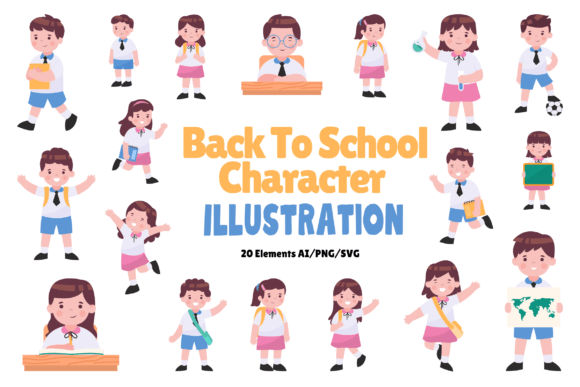
Boys and Girls Back to School Graphics: Smart, Scalable Assets for Real Design Work
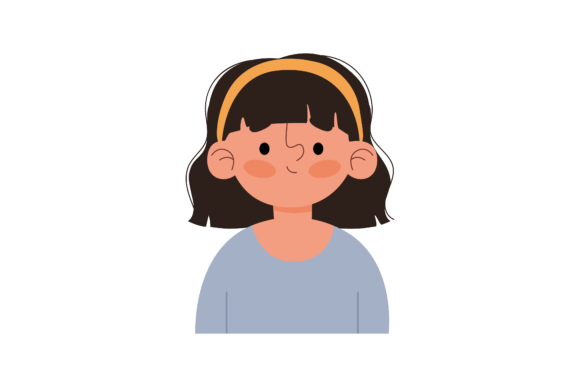
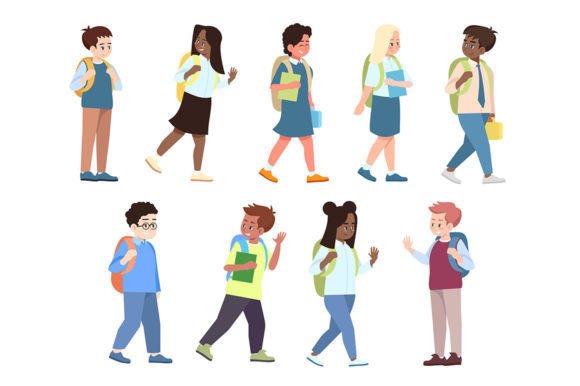
If you're designing a welcome banner for a preschool newsletter, updating a school district’s social media calendar, or building a back-to-school product launch for an edtech startup—you’ll likely need clean, expressive, and professionally styled visuals. That’s where Boys and Girls Back to School Graphics come in: modern, full-body cartoon-style illustrations of children, isolated on white backgrounds, delivered in multiple editable formats (JPEG, PNG, AI, EPS, SVG). These aren’t clipart relics—they’re purpose-built design assets meant to integrate smoothly into brochures, infographics, websites, presentations, and print materials.
Why these graphics matter—and why “just any” school-themed image won’t cut it
Many creators assume that searching “back to school kids clipart” will yield usable results—only to discover mismatched styles, low-resolution files, inconsistent proportions, or licensing traps. A cartoon boy holding a backpack might look great at thumbnail size—but pixelate badly on a trade show banner. Or worse: the file lacks transparency, forcing time-consuming background removal. That’s where Boys and Girls Back to School Graphics stand apart. Each illustration is drawn with intentional line weight, balanced color palettes, and consistent scale—designed from the ground up for versatility, not just decoration.
Common oversights—and how they quietly cost time, clarity, and credibility
Mistake #1: Assuming all vector files behave the same. You download an EPS file labeled “vector,” open it in Canva or PowerPoint, and find it’s actually a rasterized placeholder—not editable paths. True vectors (like native Illustrator AI or scalable SVG) let you recolor individual elements, adjust stroke thickness, or isolate limbs for animation. If your goal is flexibility—say, swapping a blue backpack for red across 12 slides—verify the file opens *and edits* as expected in your software before purchase.
Mistake #2: Overlooking body language and inclusivity cues. Not every “boy” or “girl” illustration conveys warmth, curiosity, or engagement. Some default to stiff poses or outdated stereotypes (e.g., girls holding notebooks while boys hold science kits). Modern educators and inclusive brands need figures that reflect diverse expressions, abilities, and subtle cultural context—without needing heavy editing. Check if the set includes varied stances (leaning forward, waving, carrying supplies), natural postures, and neutral yet expressive faces.
Mistake #3: Skipping format compatibility checks—until it’s too late. A marketer preparing a quick Instagram carousel might only need PNGs with transparent backgrounds. But a freelance designer building a brand toolkit for a tutoring app may need layered AI files to match client brand colors precisely. Don’t assume one format fits all workflows. Know your use case first: Is this for web (SVG/PNG), print (CMYK-ready PDF/EPS), or production handoff (layered AI with named groups)?
What to verify before downloading—or buying
Before adding Boys and Girls Back to School Graphics to your project, ask yourself three practical questions:
- Will this scale without compromise? Zoom in on the preview: Are lines crisp at 400%? Do hair details or backpack zippers stay legible? If edges blur or textures dissolve, it’s likely a high-res raster masquerading as vector.
- Can I adapt it—not just place it? Open a sample SVG in a browser inspector or drag it into Figma. Try changing fill color via CSS or adjusting a path point. If it resists simple edits, it’s probably flattened or embedded—and less future-proof.
- Does the style harmonize with what’s already working? Compare it side-by-side with your current website typography, brand palette, or presentation template. A playful, thick-lined cartoon may clash with a minimalist corporate deck—but pair beautifully with a Montessori center’s warm, earthy aesthetic.
Better choices start with intention—not urgency
When BSD Studio curates assets like these, they prioritize real-world utility over visual novelty alone. That means testing each illustration across devices, confirming export fidelity in both Adobe and open-source tools (like Inkscape), and ensuring consistent sizing so a “girl with lunchbox” aligns proportionally with a “boy with tablet.” It’s why their Boys and Girls Back to School Graphics sets include matching accessories (backpacks, notebooks, headphones) as separate layers—not glued-on elements.
For example: A small business owner launching a summer learning camp used the SVG versions to build interactive web buttons—changing backpack colors on hover using CSS. An elementary teacher imported the AI files directly into Google Slides (via “Insert > Image > Upload”), then ungrouped elements to animate a “first day” sequence—no third-party plugin needed. Neither needed advanced skills—just clear file structure and thoughtful design.
Final note: Quality isn’t about complexity—it’s about fit
You don’t need 50 variations of the same pose. You need 8–12 well-drawn, stylistically unified figures—with room to grow alongside your projects. Look for sets where the illustrator solved real problems: consistent baseline alignment for easy grid layouts, balanced negative space around figures for text overlays, and intentional spacing between limbs to avoid awkward clipping in tight containers.
If you’re evaluating options, compare how easily a single graphic adapts across three contexts: a printed flyer (needs CMYK-safe colors and bleed margin awareness), a mobile app icon (requires simplified detail at 64×64px), and a classroom poster (demands bold outlines and high contrast). The right Boys and Girls Back to School Graphics will hold up in all three—not because it’s “perfect,” but because it was built with those uses in mind.
Whether you’re refreshing a blog header, supporting a PTA campaign, or designing onboarding materials for a new education platform—start with assets that respect your time, your audience, and your standards. That’s not just smart design. It’s sustainable communication.